 By Elimu Assistant Team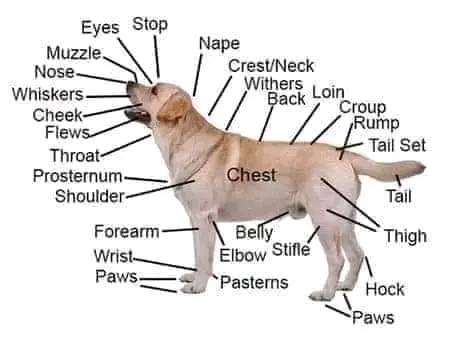

Here’s a description and uses of each part of a dog based on the new image:
1. Eyes
- Description: The organs for vision.
- Uses: Essential for navigation, social interaction, and detecting movement.
2. Stop
- Description: The indentation between the eyes and the muzzle.
- Uses: Helps characterise the dog’s facial structure and breed.
3. Muzzle
- Description: The projecting part of the dog’s face, including the snout.
- Uses: Used for smelling, eating, and vocalising; critical for communication.
4. Nose
- Description: The organ at the end of the muzzle.
- Uses: Highly sensitive for scent detection; important for tracking and exploring.
5. Whiskers
- Description: The long, sensitive hairs on the muzzle.
- Uses: Helps in sensing the environment, especially in low light.
6. Cheek
- Description: The sides of the face.
- Uses: Contributes to the overall facial structure and appearance.
7. Flews
- Description: The hanging skin of the upper lip.
- Uses: Aids in grasping food and can help with drooling.
8. Throat
- Description: The area in front of the neck.
- Uses: Houses important structures for breathing and vocalising.
9. Prosternum
- Description: The part of the chest in front of the sternum.
- Uses: Supports the structure of the chest.
10. Shoulder
- Description: The joint connecting the front leg to the body.
- Uses: Allows for movement of the front legs; important for running and playing.
11. Chest
- Description: The front part of the body.
- Uses: Protects vital organs and supports breathing.
12. Belly
- Description: The underside of the body.
- Uses: Houses digestive organs and provides space for movement.
13. Elbow
- Description: The joint between the upper and lower foreleg.
- Uses: Allows for bending and movement of the front leg.
14. Stifle
- Description: The knee joint of the hind leg.
- Uses: Allows for movement and support when walking and running.
15. Pasterns
- Description: The area between the foot and the lower leg.
- Uses: Provides flexibility and support during movement.
16. Forearm
- Description: The part of the front leg between the elbow and the paw.
- Uses: Contributes to the dog’s ability to walk and run.
17. Thigh
- Description: The upper part of the hind leg.
- Uses: Contains powerful muscles for jumping and running.
18. Hock
- Description: The joint in the hind leg is analogous to the ankle.
- Uses: Provides flexibility and support during movement.
19. Tail Set
- Description: The point where the tail attaches to the body.
- Uses: Influences tail movement and communication.
20. Tail
- Description: The appendage extending from the back.
- Uses: Used for balance and communication, expressing emotions.
21. Paws
- Description: The feet of the dog.
- Uses: Essential for walking, running, and gripping surfaces.
These parts are vital for a dog’s movement, communication, and overall well-being.
UNLOCKED SELF-ASSESSMENT TEST ON TOPIC
🐕 External Dog Anatomy Quiz
Test your knowledge of a dog’s external body parts
Your Results
Related Science Posts
- Parts of a fish and Their Uses

- Parts of a Goat and Their Uses
- External Parts of a Chicken and other Birds
- Understanding Friction Reduction, Volume Measurement Tools, Mixture Separation Methods, and Health PromotionExplore effective ways to reduce friction between surfaces, discover tools used for measuring volume, learn…
- Understanding Laboratory Apparatus and Area CalculationsMatch the following laboratory apparatus with their names. (4mks) A grade 7 student came across…
- Basic Scientific Skills Acquired Through Integrated ScienceQuestions Answers DOWNLOAD TUTORIAL WITH LEARNING ACTIVITIES RELATED POSTS
- Careers in Health Education: Exploring Diverse OpportunitiesQuestions Answers Download Tutorial with activities Related Health Questions
- Essential Safety Measures and Regulations in the LaboratoryQuestions: Answers: Download Tutorial and Activities Related Integrated Science Posts
- Essential Materials Found in a First Aid KitQuestions Answers Download Tutorial and Activities Related Tutorials
- Understanding the Causes of Common Laboratory Accidents: A Safety GuideCauses of Common Laboratory Accidents Answers to the Causes of Common Laboratory Accidents Download Tutorial…
- MATING PROCESS IN CHICKEN / BIRDSThe mating process in chickens involves several key steps and behaviours: 1. Courtship Behavior 2….


