KCSE HOME SCIENCE FORM 4 MOCK REVISION KITS
Introduction to KCSE Home Science Form 4 Mock Revision Kits The KCSE Home Science curriculum…

In the foundational years of education, particularly from Grade 1 to Grade 6, a comprehensive curriculum is vital for nurturing well-rounded learners. The Kenya Institute of Curriculum Development (KICD) outlines essential learning areas that ensure children receive a balanced education. Here’s a closer look at these areas and their respective lesson allocations per week.
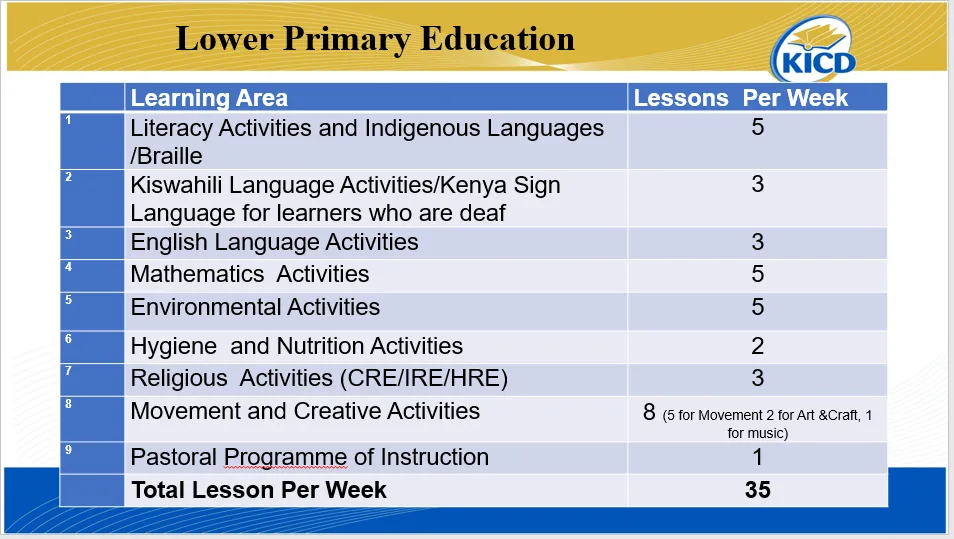
The curriculum for lower primary education reflects a commitment to fostering an inclusive and engaging learning environment. By covering a diverse range of subjects, educators can cater to various learning styles and needs, ultimately preparing students for future academic and personal success.
This structured approach not only equips students with essential skills but also instills values and knowledge that will guide them throughout their educational journey. The KICD’s curriculum aims to create well-rounded individuals ready to contribute positively to society.

Posted on by Elimu Assistant Team
Introduction to KCSE Home Science Form 4 Mock Revision Kits The KCSE Home Science curriculum…

Posted on by Elimu Assistant Team
Kwashiorkor is a severe form of malnutrition that primarily affects young children. It is caused…
Posted on by Elimu Assistant Team
Rickets is a condition that affects bone development in children, causing soft and weak bones….

Posted on by Elimu Assistant Team
Explore the unique types of traditional houses that the Kisii community lived in, including round…
Posted on by Elimu Assistant Team
Cultural artifacts can be found in various locations within a country, showcasing the diverse herita…
Posted on by Elimu Assistant Team
Discover the diverse cultural artifacts found in Kenya, from Maasai beadwork to Kisii soapstone carv…

Get in Touch!If you need any educational resources, feel free to reach out directly. I'm here to help!Name: Mr. Atika Email: nyamotima@yahoo.com Phone: 📞 0728 450 425Let’s empower your learning journey together!
Elimu Assistant
Access a wide range of academic resources, including KCSE past papers, mathematics, and chemistry materials to enhance your exam preparation. | WhatsApp! | Telegram! |
Elimuspace
Access a wealth of information, including job opportunities, news, and academic materials. Stay updated and connected with a community of followers. |Join Elimuspace Now!|

%20Learning%20Areas%20and%20Number%20of%20Lessons)