 By Elimu Assistant Team
 Hydration vs. Dehydration
Hydration refers to the process of maintaining an adequate level of water in the body, which is essential for overall health and functioning. Proper hydration helps in:
- Regulating body temperature
- Maintaining electrolyte balance
- Supporting digestion and nutrient absorption
- Aiding in joint lubrication
- Facilitating cellular processes
Signs of Good Hydration:
- Clear or light-colored urine
- Normal energy levels
- Healthy skin elasticity
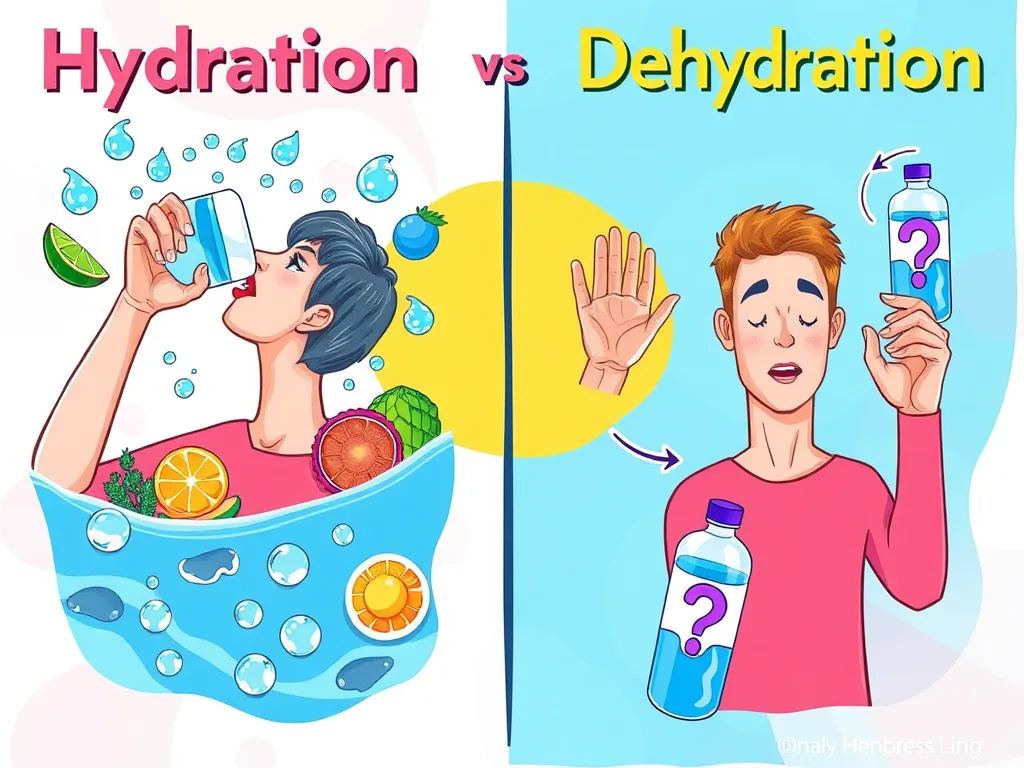
Dehydration occurs when the body loses more fluids than it takes in, leading to insufficient water levels for normal functions. It can be caused by:
- Inadequate fluid intake
- Excessive sweating
- Illness (fever, vomiting, diarrhea)
- High temperatures or humidity
Signs of Dehydration:
- Dark yellow urine
- Thirst
- Dry mouth and skin
- Fatigue
- Dizziness or lightheadedness
Types of Dehydration:
- Mild Dehydration: Loss of 1-2% of body weight; may cause slight thirst and dry mouth.
- Moderate Dehydration: Loss of 3-5% of body weight; symptoms include increased thirst, dry skin, and fatigue.
- Severe Dehydration: Loss of more than 5% of body weight; can lead to serious complications and requires medical attention.
